


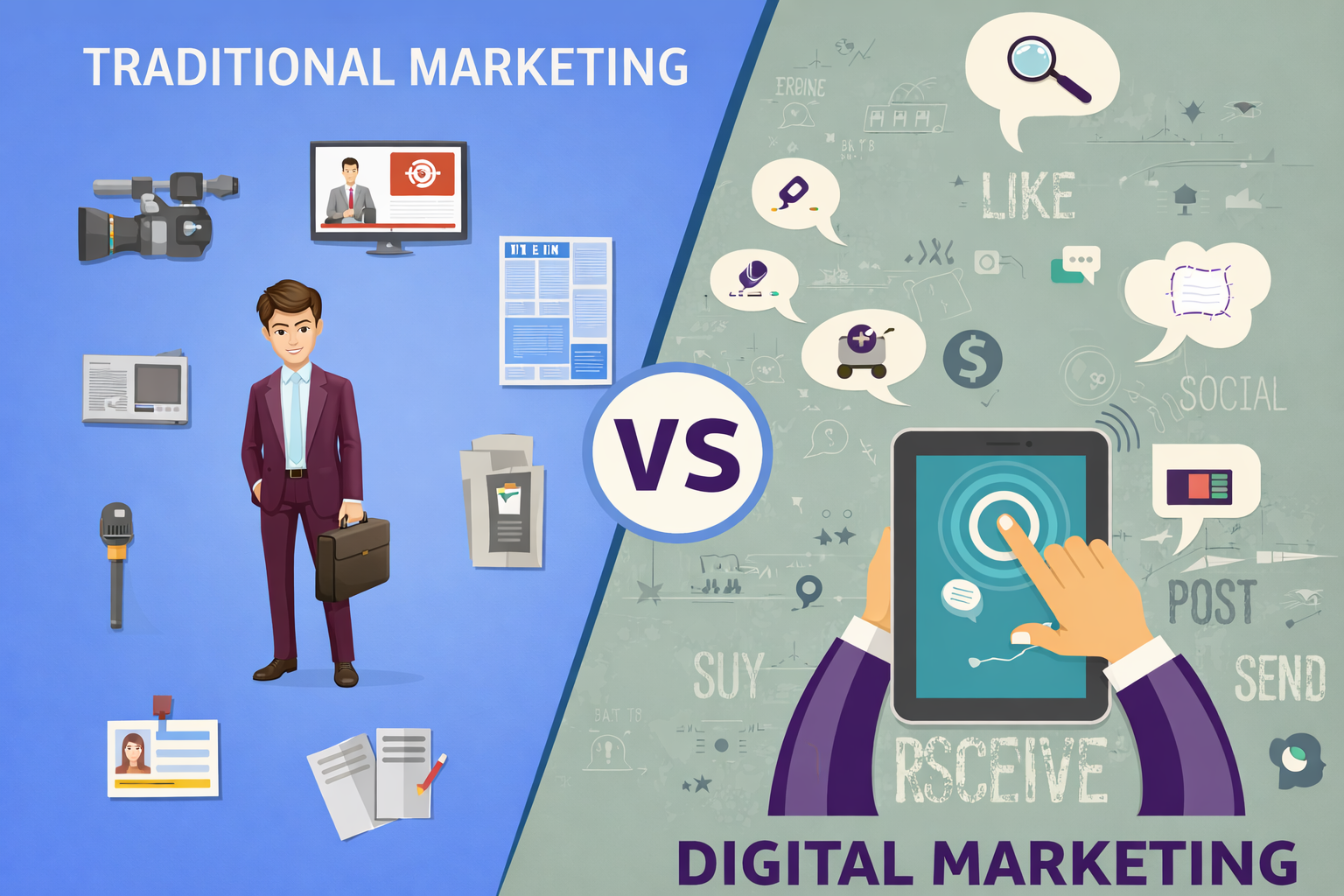
Marketing has evolved rapidly over the past decade, and by 2026, businesses are facing an important question: Should they invest more in digital marketing or stick with traditional marketing methods? While both approaches have their strengths, the effectiveness of each depends on changing consumer behavior, technology, and measurable results.
In this blog, we’ll compare digital marketing vs traditional marketing, explore their advantages and limitations, and explain which strategy works best for businesses in 2026.
What Is Traditional Marketing?
The term “traditional marketing” describes offline strategies that have been employed for many years. These include:
• Television and radio advertisements
• Newspaper and magazine ads
• Billboards and outdoor signage
• Direct mail (flyers, brochures, postcards)
• Event sponsorships and print promotions
Traditional marketing focuses on reaching a broad audience and building brand awareness through repetition and visibility.
Advantages of Traditional Marketing
• Strong local reach, especially for brick-and-mortar businesses
• Tangible materials (print ads, flyers) that feel trustworthy
• Effective for brand recognition among older demographics
Limitations of Traditional Marketing
• High costs with limited targeting options
• Difficult to measure ROI accurately
• One-way communication with little audience interaction
What Is Digital Marketing?
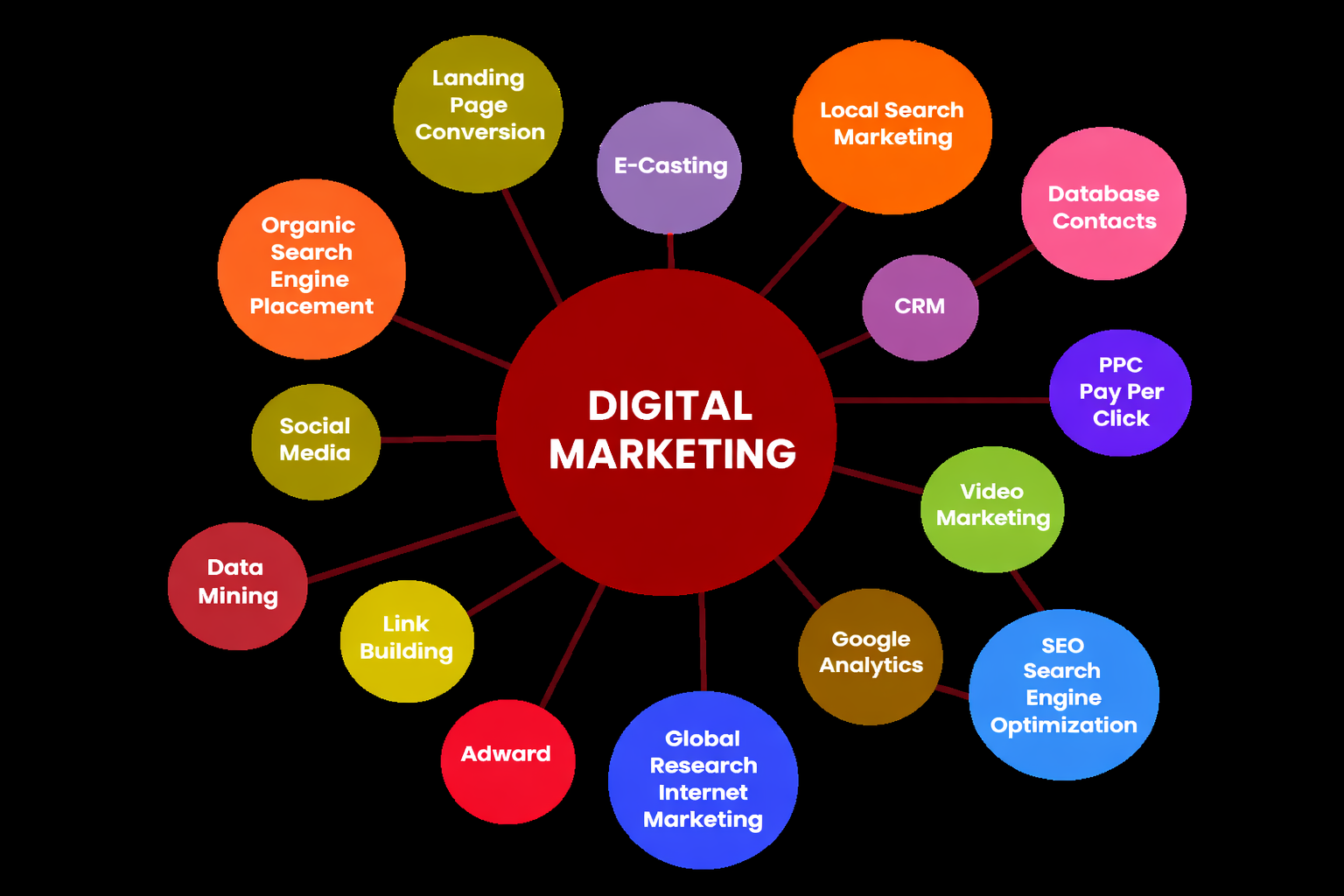
Digital marketing includes all online marketing strategies used to reach consumers through digital channels, such as:
• Search Engine Optimization (SEO)
• Social media marketing
• Pay-per-click (PPC) advertising
• Email marketing
• Content marketing and blogging
• Website optimization and analytics
Digital marketing focuses on data-driven strategies, personalization, and real-time engagement.
Advantages of Digital Marketing
• Highly targeted campaigns based on interests, behavior, and location
• Measurable results through analytics and tracking tools
• Cost-effective options for businesses of all sizes
• Two-way communication with customers through comments, messages, and reviews
Limitations of Digital Marketing
• Requires consistent management and optimization
• Results may take time, especially with SEO
• Competitive online space requires strategic planning
Key Differences Between Digital and Traditional Marketing
Feature DigitalMarketing TraditionalMarketing
Targeting Highly specific and personalized Broad and general
Cost Flexible budgets Often expensive
Measurement Real-time analytics Limited tracking
Engagement Interactive One-directional
Reach Global and scalable Mostly local or regional
Consumer Behavior in 2026
In 2026, consumers are more digitally connected than ever. Before making a purchase, most people:
• Search on Google
• Read online reviews
• Compare brands on social media
• Visit websites for credibility
Mobile usage, voice search, and AI-driven recommendations continue to influence buying decisions. This shift strongly favors digital marketing strategies, as they meet customers where they already spend their time—online.
Traditional marketing still plays a role, but it no longer drives decisions alone.
Which Marketing Works Best in 2026?
Digital Marketing Leads the Way
For most businesses in 2026, digital marketing delivers better results due to:
• Precise audience targeting
• Lower cost per conversion
• Scalable growth opportunities
• Data-backed decision-making
SEO, social media, and content marketing help brands build long-term visibility and trust, while paid ads offer quick exposure and measurable performance.
When Traditional Marketing Still Works
Traditional marketing can still be effective for:
• Local service businesses
• Events and community-based promotions
• Brand awareness campaigns paired with digital efforts
However, on its own, traditional marketing lacks the flexibility and insight modern businesses need.
The Best Strategy: A Hybrid Approach
The most successful brands in 2026 don’t choose one over the other—they combine digital and traditional marketing.
For example:
• A billboard that promotes a website or QR code
• Print ads that drive traffic to social media pages
• Events supported by online advertising and email follow-ups
This integrated approach creates a consistent brand experience while maximizing reach and conversions.
Why Digital Marketing Is a Long-Term Investment
Unlike traditional marketing, digital marketing builds lasting assets:
• SEO improves search rankings over time
• Content continues generating traffic
• Social media strengthens brand authority
• Analytics help refine strategies continuously
This makes digital marketing ideal for businesses focused on sustainable growth, not just short-term exposure.
Final Thoughts
So, what works best in 2026—digital marketing or traditional marketing?
The answer is clear: digital marketing leads, while traditional marketing supports.
Businesses that prioritize SEO, content, social media, and data-driven campaigns gain a competitive advantage. When combined strategically with traditional methods, digital marketing becomes even more powerful.
If your goal is visibility, engagement, and measurable growth in 2026, investing in a strong digital marketing strategy is no longer optional—it’s essential.